
Artist: Dinesh Shrestha
Story of Trikāya

If you’ve made it to this website you’ve probably been asking yourself the same questions that have driven me my whole life:
“Why do I suffer?”
“Is there anything I can do to be free of this incessant suffering?”
“Is there any larger meaning to life?”
“What happens when we die?”
“Who am I?”
“Is there something more essential to me than my thoughts
and feelings, something that lives on after death?”
To find the answers to life’s most crucial questions I searched far and wide, spent tons of money in my teens, twenties and thirties traveling to meet masters in remote locations in the US, South America, Asia, India and Europe. In particular, I was looking for anyone who had a system of understanding (view) along with a system of directly discovering that understanding for myself – a system of practice (method). And I especially was interested in finding a system with a strong history of having produced the results of self-realization for many generations. I wanted something scientific in the sense that it is reproducible. Lot’s of people believe they have a very high potential for enlightenment, but I wasn’t so confident. I wanted to go a tried and true, proven way using a well-tested method to find the answers to the questions that burned inside of me.
As I read stories of the great masters of enlightenment I started to see that in the beginning they usually struggled mightily with the limitations of their mind and energy (negative karma) that caused them to suffer, usually needing to undergo decades of purification. I saw that the great masters I was reading about and finally meeting weren’t really super gifted spiritual aspirants as much as they were completely committed to their realization and to the system of meditation and yoga they were using to discover their true nature. And that it was by following a method laid out by their spiritual ancestors aided by their complete dedication to the teachings, practices and their teachers that they became irreversibly enlightened. Not only did they no longer suffer but they lived for the benefit of all beings! A wonderful result and a wonderful life, no doubt!

I became a student of many teachers until in the 80’s I settled down with one system, one lineage and one teacher of that system. I realized that although I had a fair bit of training in many spiritual systems by the time I was only 25, that I didn’t complete any of them. I needed to get deeply grounded in a system and to peel the layers of my “onion” to reveal my true nature.
I was trained in science in undergraduate school and went on to receive a clinical doctorate in health science after that, so I had a well-developed sense of discrimination and critical analysis, not to mention resourcefulness, self-authority and the acceptance of full responsibility for my life that comes with that authority. Let’s say that I wasn’t about to get snowed. I owe this rugged individualism not only to my training in science, meditation and martial arts but to the wild New York City years of my youth which gave me a degree in “street smarts”. All of this is to say that I was fairly good at examining a spiritual system and its teachers, and figuring out if they had a good stable state of realization. And if they did, I could accurately assess whether they could effectively transmit that state and their system of practice to me.
I finally got the grounding I sought in a tradition that my teacher merely called “yoga”. This system of “yoga” as it turns out was a very detailed and precise methodology for training the mind and body, followed by going beyond the thinking and awareness-mind into the deeper capacities that lie dormant within. This potential energy of unlimited consciousness exists in a “veiled” condition within all human beings. My masters from India called this energy-consciousness “kundalinī”.
Ten years after I began training in this system of “yoga” I graduated from training. I said I wanted to enter retreat practice as a hermit in the mountains and they said “No, you are to teach. It would be selfish not to share the knowledge of this path that you have received.” They said that my re-payment to my teachers and the lineage masters for the gift I had received was to help people learn to transform their experience of life from suffering to realization and liberation as they had helped me do for myself. So I changed course internally and started to embrace a life of teaching. I ended up making a few more trips to see my teachers in India before feeling finally that my study with them was complete. And sure enough, true to their style it was on these trips, only after they had graduated me and sent me away that they bestowed some of the real gems of our tradition such as the 12 Stage View Teachings. Always testing…
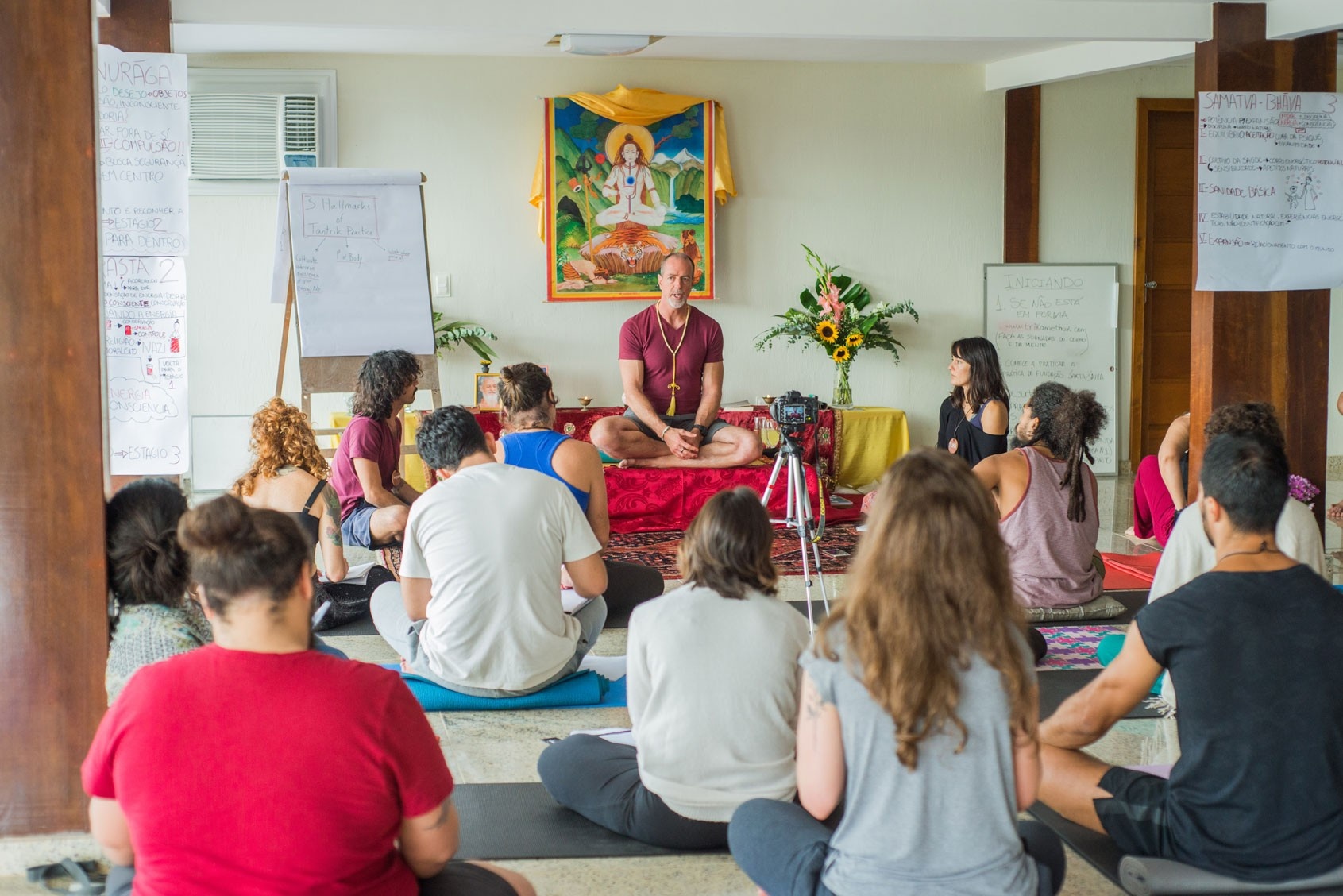
But I still felt slightly deficient in knowledge because my teachers emphasized a path of unbroken oral transmission and dedicated practice eschewing the use of text books. When I asked them what I was to teach they said “Teach your experience.” I said… “…Sure, great, but…what should I say when students ask me questions?” To this my teacher said, “If you want to teach like that, you’ll have to read books.” He meant traditional philosophy texts. I laughed aloud when he said this but immediately began a serious process of study. I read all the available books from the great traditions of spiritual practice – Kundalinī Hatha Yoga, Nondual Śaivism, Veda, Vajrayana, Daoism, Bön, etc. I even became a partner in a spiritual book shop in Varanasi, India because I was spending all day in the shop reading!
From my reading I gained a deeper appreciation for the system of teachings and practices I learned from what I came to call the OPT, or Oral-Practice Tradition. I saw that the OPT I learned was the pith or the core of what all the great practice traditions from India, Tibet and China have in common, and the reason why they continue to produce masters of great attainment or Mahāsiddhas in Sanskrit & Grub-thob Chen in Tibetan. I also saw that the learned proponents of each of these systems often fought with each other over which system is better which seemed to me to be a monumental waste of energy based on egoic pride, and I finally understood why my teachers relied on orally transmitted knowledge and direct experience with expert guidance over text and debate.
The OPT I trained in used entire systems of practice in these categories: Contemplations on Virtues, Dynamic and Passive Meditations, 5 Elements Practices, Systems of Kriyā Yoga, Classical Mind Training, Non-Conceptual Meditation, Advanced Meditations on Light and Space, Kundalinī Hatha Yoga (aimed at creating and controlling the energy of consciousness such as Mahākumbhaka [Sanskrit] ), Deity Yoga, Mantra, Transference of Consciousness, Consort Yoga, Dream and Sleep Yogas, etc. There are also entire systems of oral teachings or what we term “View Teachings” that explain every aspect of the practices and the path as a whole.
Before my teacher left the body in true yogi fashion,… sitting upright in lotus posture and remaining that way for days without a heartbeat or breath, gathering all the vital energies and consciousness into the central channel then taking them out through the top of the crown…he recommended that I finish my post-grad studies with the Tibetan yogis. He said he had travelled in Tibet on foot as a young man and had trained in a monastery there. He had a great appreciation for Tibetan systems of meditation and it was from his urging that I began to attend Dzogchen retreats led by lamas of Vajrayana and Bön. Many years later, through a book that another kind teacher gave me I came into contact with and began my study of what is called Dzogchen meditation.

Artist: Kalden Grg
I saw in the path of Dzogchen the same emphasis on the pith, on what is essential to human realization as well as what my first teacher thought was so remarkable about Dzogchen – the rainbow light body – the yogic ability to physically resolve one’s karma of individuality and physicality so completely as to resume the most essential “form” of pure wisdom-light before dying. My Indian master was the first non-Tibetan to write about the wisdom-light body phenomenon in English in his books, and his discussions of it over the years peaked my interest to say the least.
Both my Indian and Tibetan teachers gave me the mandate to teach the essence of the path. To not elaborate and carry forward overly religious and cultural trappings, but instead to cut away any superfluous aspects of the path, refine it to its most essential elements necessary for liberation from suffering and to translate the most important teachings from Sanskrit and Tibetan into English in order to make the path of the Mahāsiddhas more accessible.

A modern spiritual path needs to be streamlined, efficient, even scientific in a sense. People in general don’t have the luxury to take an 18-month solo retreat like I did back in the 1980’s. Nowadays we have to work 50% more hours or even more than that to provide the same type of lifestyle that people had in the 1950’s and 1960’s. Therefore, our spiritual systems need to be changed and upgraded, not the essential teachings and practices, but the way in which the teachings and practices are delivered.
Modern people are also very much inclined towards science and averse to old style religions. I’m also one of those people, and this is why I’m happy to strip away the unnecessary aspects of culture and religion surrounding the gems of liberation in the Mahāsiddha yoga path. The OPT is very scientific in the sense that it doesn’t demand blind faith. It has reproducible results generation after generation. My teacher said “I have two arms, two legs, and a head,…so do you. If you follow these exercises they’ll work for you too because we are both human.” That really struck a chord with me.
The Path of Trika Mahāsiddha Yoga (TMY) is the essentialized path of complete human realization coming from the Oral-Practice Tradition. It’s a“living cannon” of teachings and practices developed and transmitted by, in my humble opinion, the greatest masters of spiritual science the world has ever known – the Mahāsiddhas, who all resolved individual physical embodiment through the process of the wisdom-light body rather than dying. This is not just a mythological story buried in the sands of time but rather a living tradition with new female and male Mahāsiddhas attaining some form of the wisdom-light body every year or two in Tibet, Nepal, China, or India. Despite what religious scholars may say Mahāsiddhas have come from all of the nondual meditation and yoga traditions of the east without prejudice: Tibetan Bön and Vajrayana, Śaivist Yoga, and Orthodox Daoism.
Trika in Sanskrit means “the three” and refers to the 3 essential aspects or “bodies” existing as one reality in every human being. It also denotes the 3 gateways to realization in practice – our body, our energy, and our mind. The word “Yoga” as used in Trika Mahāsiddha Yoga denotes a path of spiritual cultivation and does not refer to physical yoga, though TMY does make use of various traditional forms of yoga and other body practices.
So, that’s our story. We’ve created this website as a way for people to complete Preliminary & Foundation training in traditional Mahāsiddha Yoga via their computer. And as a way for people to have access to an ongoing learning portal as we continue to post self-guided series, offer live trainings, monthly Q&A sessions, and more.
Sincerely,
Dharma Bodhi

May All Beings Benefit!!!
SARVA MANGALAM!!!
TRIKAYA SYSTEM OF PRACTICE
Trika Mahāsiddha Yoga is a clear and comprehensive system of practice and guiding theory with many interrelated branches all leading the practitioner to irreversible realization of their own True Nature.
Students can learn at their own pace, stay focused in one track of study or customize their path to follow their particular interests and aptitudes. Trika Mahāsiddha Yoga’s modernized delivery system makes the teachings of nondual dharma accessible without sacrificing the effectiveness, integrity and sacredness of the tradition.
What is the relationship between TMY and the Mahāsiddhas?
What is Tantra?
TRIKAYA System Overview


Independent Cycles of Teachings & Practices
The following cycles are core, stand-alone topics that will supplement your main focus of practice in the 5 Ways.
◉ TANTRIK ENNEAGRAM
◉ SIX REALMS & YOGAS OF THE SIX REALMS
◉ ĀTMAŚAKTI
◉ UNLEASHING THE FORCE OF THE RED BINDU
◉ RUSHEN
◉ YOGAS OF DREAM, SLEEP & DEATH
"Entering the Stream"
This is the traditional way of beginning Dharma practice. Entering the Stream gives a progressive method of learning and practice wherein each step builds upon the previous step, thus creating a solid foundation, overview and understanding of the teachings, practices and path. It is recommended that you first take the Peliminaries of TMY, followed by the Foundations of TMY. Though some students who are more ambitious and have a bit more time on their hands will engage with Preliminaries, Foundations and Kundalinī Hatha Yoga simultaneously, while they prepare to attend the next offering of the Entering the Stream In-Person Retreat, and that’s ok too.
1) Preliminaries of TRIKAYA


2) Foundations of TRIKAYA


3) Entering the Stream (In-Person Retreat)


4) Kundalinī Hatha Yoga - Free Intro Course


The 5 Ways to Realization
Within Trika Mahāsiddha Yoga there are 5 complete and unique, yet interrelated paths of practice and teachings. Each of The 5 Ways to Realization are 5 approaches to practice and the path that are capable of taking you from rank beginner in the Dharma to the ultimate experience of your own True Nature – that of Buddhahood.
Choose Your Way:
Select your main Way of Realization. You may freely attend any of the other Ways’ trainings as well in order to support the practice of your main Way, or just out of interest.
Way of Meditation


Way of Mirror Consorts


Way of Fire

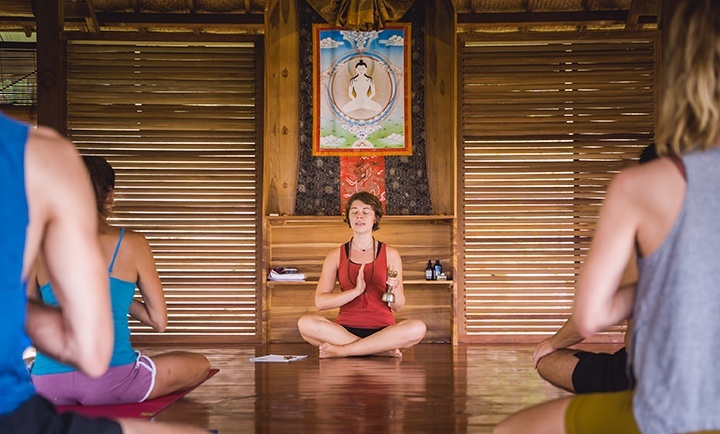



Way of Water
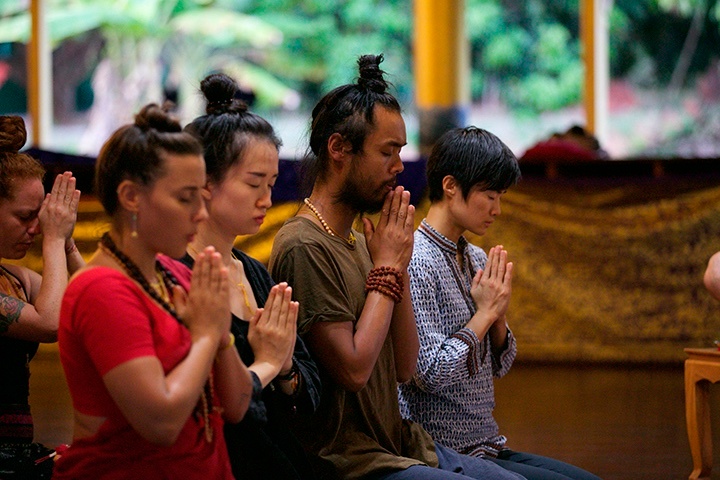


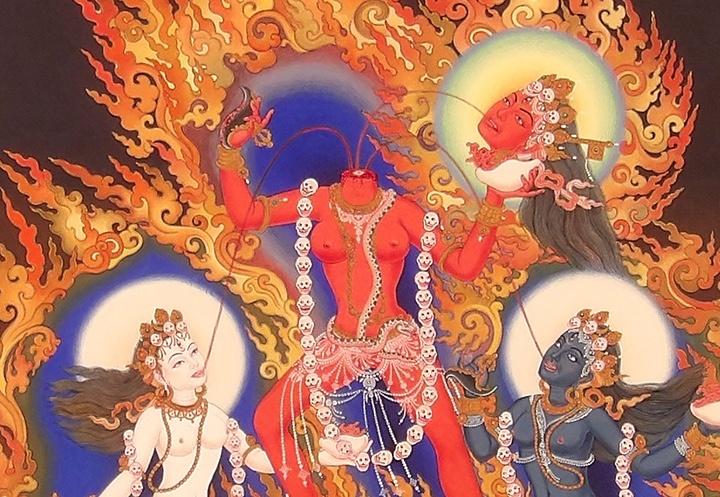


Way of Warrior


Each of the 5 Ways has two phases of practice.
PHASE 1
The Relative Practice Phase - "The Path of Transformation"
This phase is characterized by a step-by-step approach to the knowledge and practices that ensure the beginner and intermediate level practitioner’s unbroken and stable progress through the spiritual work of discovering, or revealing, the inherent perfection at the core of every human being’s experience.
PHASE 2
The Direct Realization Phase - "Vajra Path"
Training in the Direct Realization Path teaches us how to begin to live in the fruit of ultimate realization. As the name suggests the Direct Realization Path is not progressive, rather its sole focus is on discovering and stabilizing the unbreakable and inherent experience of one’s True Nature.
Independent Cycles of Teachings & Practices
Trika Mahāsiddha Yoga also offers Independent Cycles of Teachings as online courses and in-person retreats. These programs do not require any prerequisites. They present core teachings and practices as stand-alone topics and as supplemental to your main focus of practice in the 5 Ways.
Tantrik Enneagram

Six Realms & Yogas of the Six Realms


Ātmaśakti

Unleashing the Force of the Red Bindu
Rushen
Yogas of Dream, Sleep & Death
TRIKAYA Lineage Tree
Bringing together streams of Non-Dual Dharma Practice Lineages from Daoism, Tibetan Bön, Dzogchen and Trika Śaivism.

